Long before Rev. Thembelani George Vazi became a minister, he was listening. He shared an organisational profile on his NPO Izwi Mentorship Hub at the Monthly Forum in September 2026, hosted by WWSOSA and the Faith Action Collective to End GBV. During the learning session, he further shared his journey as a traditional surgeon.
For years, working in the Office of the Speaker for the City of Johannesburg from 2011, his role was that of Municipal Outreach Coordinator — the person tasked with making sure ordinary citizens, especially those in informal settlements, had a voice in municipal processes. He spent those years engaging communities and organising dialogues, learning something that would come to define the rest of his life: the importance of participation, of accountability, and of truly listening to those on the margins of society.
Then, in 2019, Rev. Vazi felt a different kind of call. He left the city and returned home to the Eastern Cape, the province where he had grown up, to answer God’s call into full-time ministry with the United Methodist Church of Southern Africa.
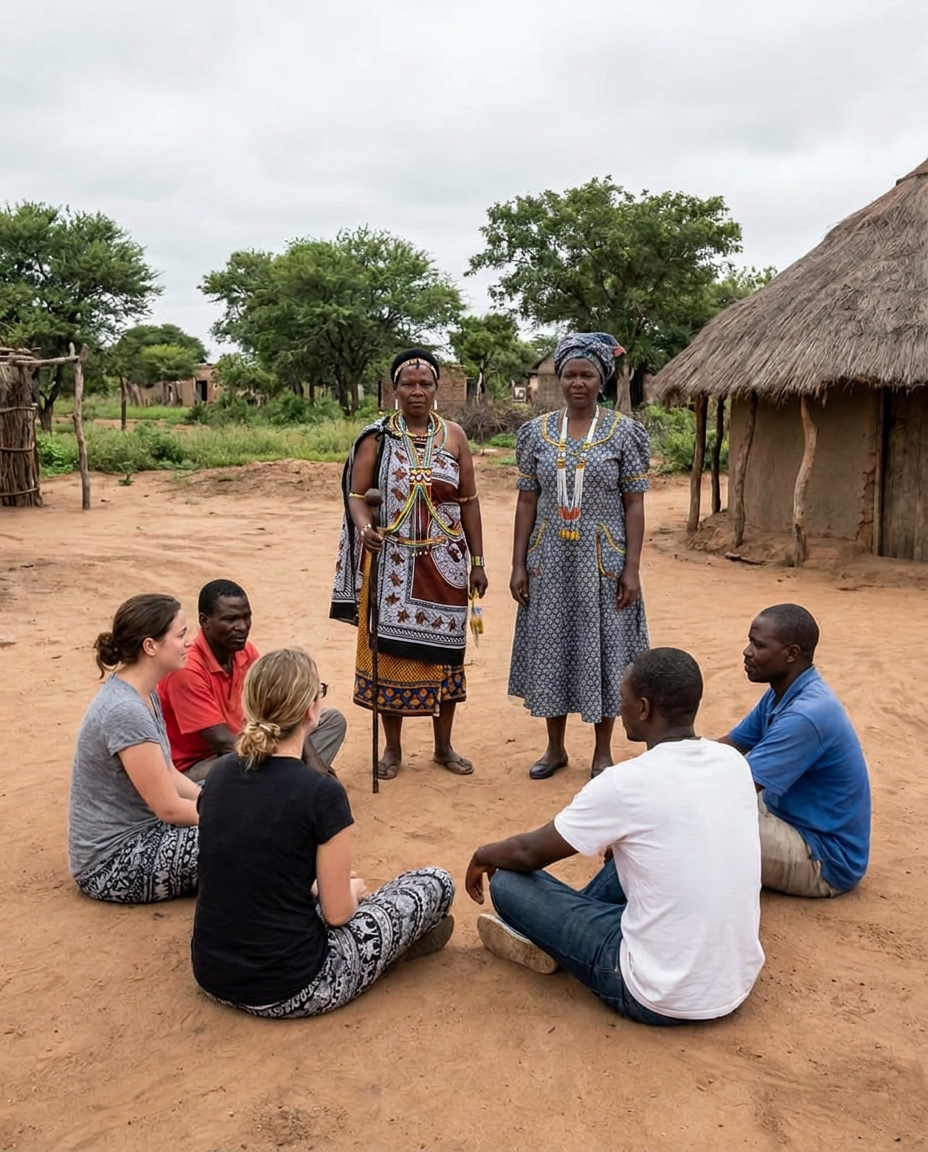
But it was in the rural communities of his home province that he encountered a gap he could not ignore. Young people — particularly learners in rural schools — had no safe space to talk about human rights. There was no forum for their voices at all.
So, together with his wife, Rev. Vazi did something about it. What began as a family initiative grew into the Izwi Mentorship Hub — izwi meaning “voice.” Its mission was simple and direct: to make sure every voice is heard.
They started by asking one question: where are the gaps? The answer led them to launch human rights clubs in nearby schools — but not as top-down programmes handing out information. The clubs are learner-led. Learners themselves choose changemakers from among their peers, who are then trained to lead campaigns on gender-based violence and human rights. As Rev. Vazi puts it, the learners are not passive recipients. They are leaders, advocates, and agents of change in their own right.
The Hub also launched eco and human rights clubs, deliberately linking environmental justice to human rights — because, as he explains, in a rural context, the land and the people are inseparable.
Perhaps the most urgent work of Izwi Mentorship Hub has been its mentorship programmes for survivors of gender-based violence, with particular focus on sexual minorities and youth leaders. These were never meant to be generic workshops. They became spaces where young people could speak their truth plainly — this is my story, this is my pain, this is my hope.
Rev. Vazi is candid about why this focus matters so deeply. In many rural schools, silence around sexual minorities remains profound. LGBTQ+ learners are often bullied, excluded, and told — explicitly — that they have no space to belong.
He remembers, when the programme first began, a learner who said to him: “When I walk into a class, I feel invisible.”
That sentence broke him. Because, as he says simply, invisibility is a violence.
It is this conviction that continues to drive the work of Izwi Mentorship Hub today — walking alongside schools, empowering learners not just to survive their circumstances, but to become the ones who steer change among their own peers.
For Rev. Vazi, advocacy could not remain something spoken about from a distance. It had to be lived.
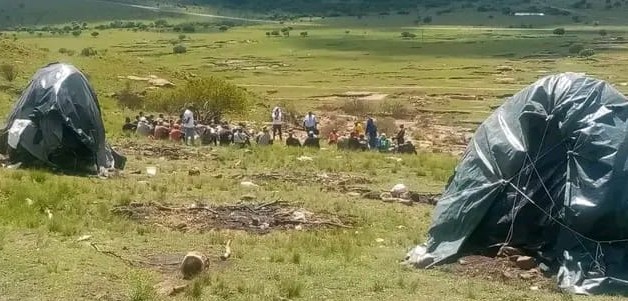
In December 2025, he took a bold step. A young man in his community had died during a traditional rite of passage — a tragedy that echoes a crisis long known in the Eastern Cape, where initiation deaths remain a painful and persistent reality. Rev. Vazi could not simply speak against this from the outside. He brought the matter to his own family, and together they made a decision: he would train and register as a traditional surgeon himself, so that when it came time, he could personally lead his own son safely to the mountain.
His aim was clear from the start — to build positive masculinity, to prevent death, and to reform harmful practices from within, rather than condemning them from outside.
But before that journey began, Rev. Vazi believed something had to happen first: parents needed to be mobilised and brought into honest conversation before their boys ever went to the mountain. What followed, he believes, had never been done in quite this way before. The conversation deliberately included both mothers and fathers — a departure from tradition, where the subject of circumcision has so often excluded women entirely.
Doctors were present, speaking about wounds and safety. Pastors spoke to the spiritual dimension of the rite. Traditional leaders were invited too, affirming their cultural respect for the practice. For the first time, boys were prepared — psychologically, spiritually, and otherwise — for what lay ahead. And critically, women were part of that preparation.
Rev. Vazi calls it groundbreaking. For four weeks, he stayed at the mountain himself, alongside his son and the other boys on the same journey. He believes it may have been the first time, in that part of the Eastern Cape, that a father was fully present — searching, walking alongside, and engaged in every aspect of his son’s initiation.
While there, gathered with the other boys, the conversations turned to healing, to masculinity, to love. At the centre of it all was a shared, urgent purpose: to prevent death, and to speak out against gender-based violence. Even government departments took notice, visiting to recognise this new model of care.
What Rev. Vazi learned in that time has stayed with him. Boys left without care are vulnerable. They need fathers. They need mentors. They need presence. And he learned something else, too — that faith and tradition can coexist, not to destroy culture, but to protect life.
Through his involvement in the Faith Leaders Gender Transformation Programme of WWSOSA and the Faith Action Collective to End GBV, his vision broadened further still. Building positive masculinity, he came to understand, was never only about boys on the mountain. It was about transforming society itself.
Rev. Vazi found something in his own experience that mirrored it closely: faith, he says, is not separate from culture — it is the lens through which culture can be reformed. Faith will always be a prophetic voice insisting on life, not death.
Reclaiming heritage, in his understanding, means keeping the cultural meaning of circumcision — honouring its role in shaping identity — while removing its dangers, and protecting the lives of the sons who undergo it. It means building a heritage where boys become men through dignity, not suffering. Reimagining the rite is not about abandoning culture, but reforming it so that it serves life: fathers present, mothers included, doctors, pastors, and traditional leaders working side by side, so that every boy returns from the mountain alive, healed, and ready to lead.
This is the vision Rev. Vazi carries at Izwi Mentorship Hub — a heritage where culture is not a source of death, but a source of life. Where tradition is not a barrier, but a bridge. Where every voice — women, men, sexual minorities, elders, and youth — is heard.
That, he believes, is the heritage we must reclaim. And that is the future we must build together.