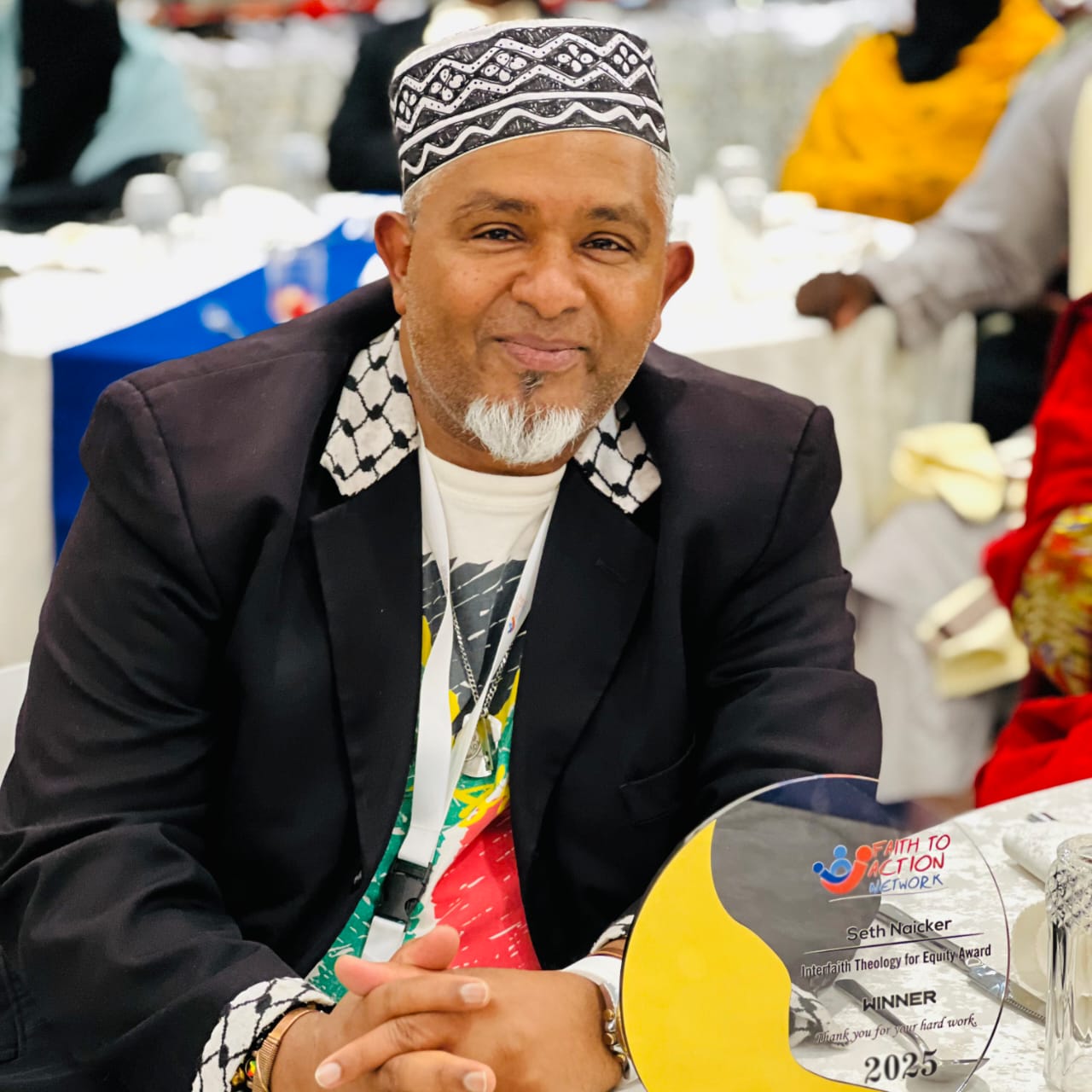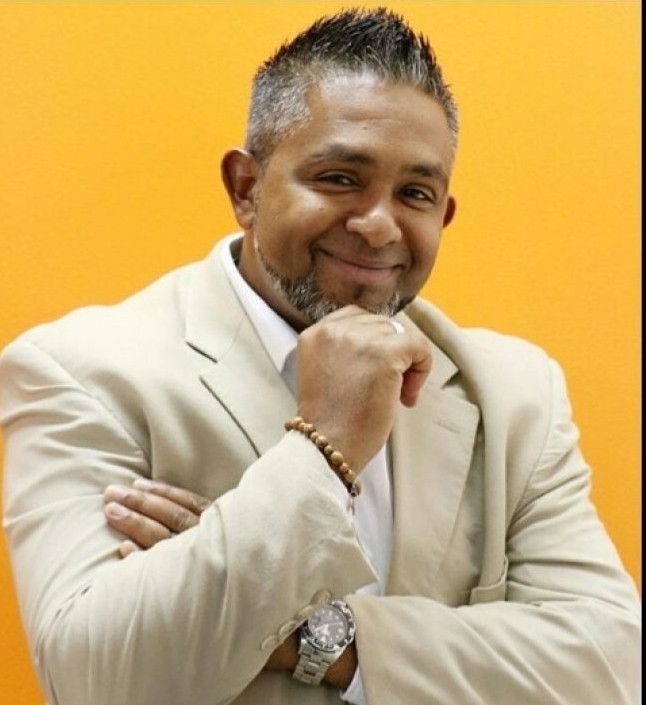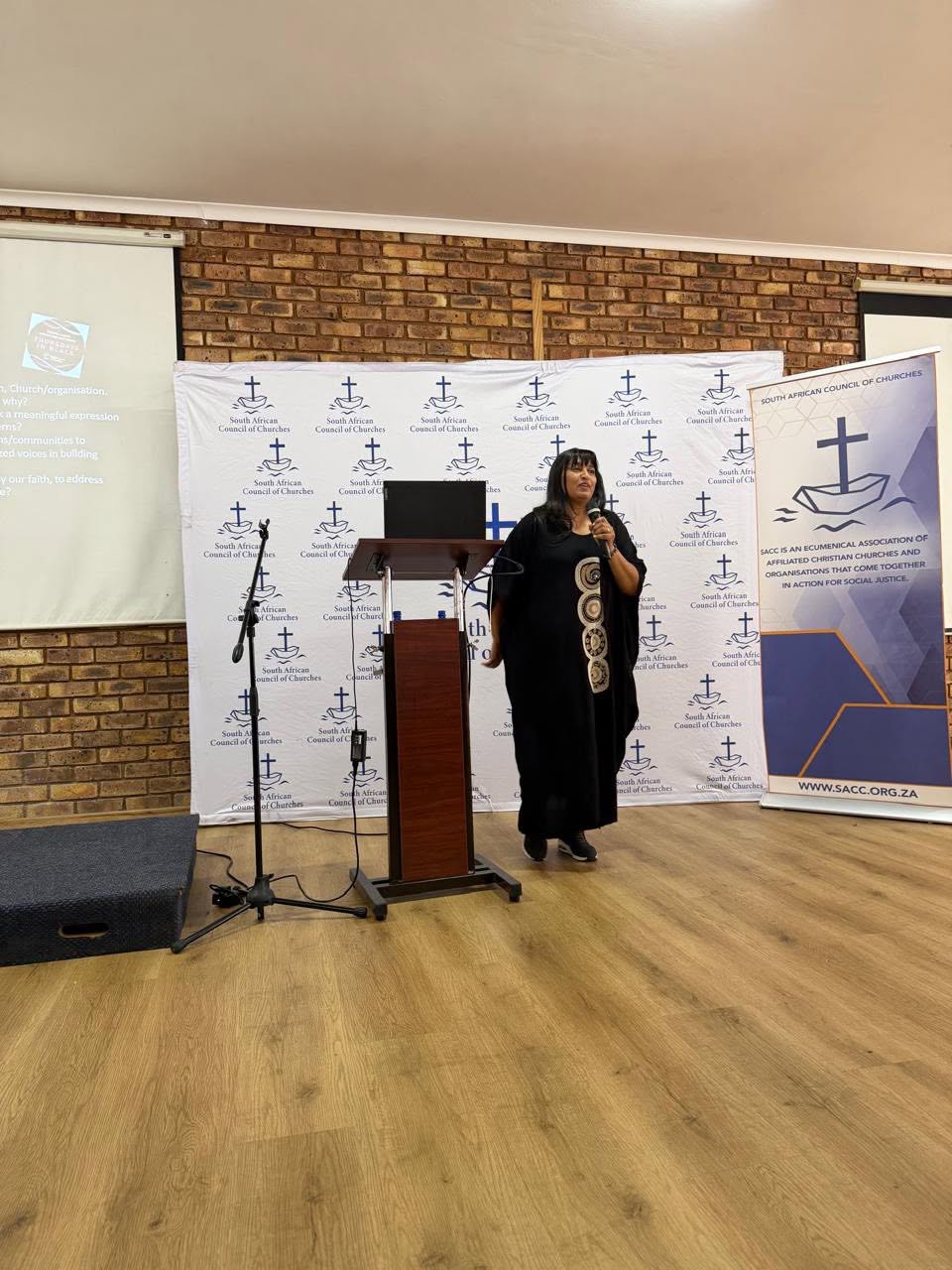
By Seth Naicker
Shortened version of Seth’s input at the Monthly Forum on Heritage on 9 September 2026, hosted by WWSOSA and the Faith Action Collective to End GBV.
When I think about reimagining our heritage, I think we first have to remember where we come from. Because how do we really understand where we are — and begin to work out where we are going — if we don’t remember where we have come from?
There is a concept from Ghana, from the Akan tradition, called Sankofa. I love the image: a bird moving forward, but with its head turned backwards, carrying an egg from the past. It asks us: What do we need to remember? What do we need to retrieve? What do we need to uphold, and carry with us into the future? And perhaps equally important — what do we need to leave behind?
Reimagining, for me, is not about throwing everything away. Nor is it about preserving everything simply because it is old. It is about going back, looking again, discerning — and asking: what is worth carrying forward?
My Journey of Faith and Heritage
I come to this conversation as a person of faith, as a faith leader — but also as someone of African Indian heritage. There has sometimes been tension between those two parts of who I am. I grew up in a Christian context where faith could feel quite stoic and pietistic. Yet in my African and Indian heritage, there was music, dance, drama, celebration, expression — there was life. Somehow, some of those things could feel suspect when they happened outside of church. I remember thinking: why does becoming more spiritual sometimes feel like becoming less whole?
Some of that questioning was shaped by my father — a Durban beachfront lifesaver who had a strong critique of the church institution, asking why it could not celebrate the cultural context in which people actually lived. Those questions became part of my own journey: What have I inherited from my faith? From my culture? What has given me life — and what has limited my understanding of God, myself, and others? This is where Sankofa becomes important. Sometimes we have to go back before we can move forward.
Ubuntu: From I to Us
One of the things I have come to appreciate in my African heritage is the wisdom of Ubuntu. Ubuntu ngumuntu ngabantu — a person is a person through other people. It is a movement from “I” to “us,” away from the isolated self, towards a recognition that my humanity is bound up with your humanity.
I would invite you to think about your own heritage. What is the language in your culture that speaks about our shared humanity? Perhaps, in reimagining our future, we don’t always have to invent something new — sometimes we have to remember what we already knew.
From “My Will” to a Larger Purpose
When I think about Ubuntu, I also think about Jesus in the Garden of Gethsemane: Yet not as I will, but as you will.” There is a movement there — from my will to a larger purpose, from the individual self to something bigger.
Can God simply be about the “I”? If my faith is only about my blessing, my salvation, my success — I have made God too small. God must also be concerned about the person dislocated from resources, dignity, opportunity, power. I come from a people who have experienced what it means to be looked down upon, and I have come to realise there are people looked down upon even more. So I began asking a question that has stayed with me: what has gone wrong with my faith when it ends up on the side of empire, and power over?
Faith Became a Question of Justice
Micah 6:8 asks: “What does the LORD require of you? To act justly and to love mercy and to walk humbly with your God.” Faith could not simply be about what I believed, or how spiritual I appeared to be — it had to become a question of how I live.
Then I encountered Luke 4, where Jesus speaks of good news to the poor, freedom for prisoners, sight for the blind, freedom for the oppressed. This is faith connected to people’s realities. So, for me, faith became a question of justice — not what do I believe, but what difference does my faith make?
Taking Back My Faith
This led me into deeper study of theology, reconciliation, and political science — into a theology that could work with people who were poor, teaching me to love and show compassion rather than judge or convert. It brought me into questions about colonial Christianity, captured in that powerful South African saying: “You have the Bible; we have the land.” Christianity came to Africa with the gospel, but it also became entangled with empire, colonialism, patriarchy, and domination.
So I began asking: how do I take back my faith? How do I decolonise it? For me, that doesn’t mean abandoning Christianity — it means asking whether I can reclaim the liberating, justice-seeking, life-affirming heart of this faith from the ways it has been captured by power over.
See. Discern. Act.
The Kairos Document gave me another important language: See. Discern. Act. It became a way of learning to look again — to see what I had perhaps not seen before, discern what was happening beneath the surface, and ask what faithful action looks like.
That journey of seeing took me more deeply into women’s lives and choices. Justice could no longer remain a broad theological idea — it had to become specific, embodied. This brought me into deeper engagement with Dr. Nontando Hadebe and a group of theologians through Saint Augustine College, and from there into the work of We Will Speak Out with Daniela Henry, the Faith Action Collective, and eventually the Faith Leaders Gender Transformation Programme.
Somewhere along that journey, I realised I wasn’t simply doing justice work anymore — I was beginning to understand gender justice: not simply about men and women, but about power, dignity, agency, identity, relationships — whose humanity gets recognised, and whose gets diminished.
Learning to Identify Gender in the Text
I began reading Scripture differently — asking not only “What does this text say?” but “What does this text do?” How does it shape the way we see one another? Whose voice does it privilege, and whose does it silence? Does it contribute to people’s dignity — or their dehumanisation? How does it land for the girl child, for the gendered other, for those who don’t fit neatly into binary categories, for people who identify as gay, lesbian, transgender, intersex, or queer?
This was a significant shift. Gender justice was no longer something happening “out there” — it became part of my own theological responsibility, bringing me back to that question: what has gone wrong with my faith when it ends up on the side of power over people, rather than power with people?
I began to see a way through my faith, and through Scripture, that challenges the dehumanisation of the “other” — one that doesn’t require me to diminish somebody else’s humanity to affirm my own. If Ubuntu ngumuntu ngabantu — if my humanity is bound up with yours — then another person’s humanity cannot be conditional. A woman’s dignity cannot be conditional. A girl’s safety cannot be conditional. For me, gender justice became a test of whether my theology could actually live out its claim about human dignity.
From Ubuntu to Beloved Community
This is where my journey moved towards Beloved Community — a faith concerned not simply with individual salvation, but with creating communities of dignity, justice, reconciliation, and belonging. Engaging with counter-patriarchal theology, feminism, and thinkers like Chung Hyun Kyung opened further questions about our relationship with one another, with creation, and with those pushed to the margins.
Beloved Community cannot simply mean “you have your faith, I have mine” — a lazy plurality where we remain separate, never having to encounter or be changed by one another. It asks us to journey together, to discover the humanity of the other, to stand in solidarity with people who may not look, believe, or worship like us. The movement becomes: from tolerance to relationship, from difference as threat to difference as gift, from power over to power with, from exclusion to belonging.
Reconciliation as Something We Participate In
2 Corinthians 5:17–20 speaks of becoming a new creation, of God “reconciling the world to himself… not counting people’s sins against them,” and then: “We are therefore Christ’s ambassadors.” Reconciliation is not simply something God does for us — it happens through us. It cannot simply mean making people feel better after conflict. It has to restore dignity, confront injustice, make room for difference, and bring people pushed to the margins back into the centre.
So What Do We Do With What We Have Remembered?
If we are going to reimagine our heritage, remembering cannot be where we stop. We have to look honestly at what we have inherited, ask what gives life and what diminishes it, and discern what belongs in the future. Perhaps the language is: this we will carry, this we will reclaim, this we will release, this we will transform.
The journey isn’t complete simply because we have found the language. The question is: what will we do with it?
Go back to your own heritage and identify one thing worth recovering. Look at your faith, culture, or institution and identify one thing that needs to be challenged or released. Ask: whose dignity needs me to speak? Whose voice needs me to listen? Where am I still benefiting from power over, when I could be practising power with?
And then do something. Have the conversation. Change the practice. Challenge the interpretation. Make space at the table. Stand with someone whose humanity has been diminished. Build a community where people experience dignity, belonging, and safety.
Perhaps that is what reimagining our heritage really asks of us — not simply to tell a better story about where we come from, but to become the people who can create a different future. That is the wisdom of Sankofa: we look back, not to live in the past, but to move forward with greater wisdom, greater courage, and greater wholeness.
So let us remember. Let us reclaim. Let us discern. Let us reimagine. And then — let us act. Not to abandon where we come from, but to discern what is worth carrying forward.