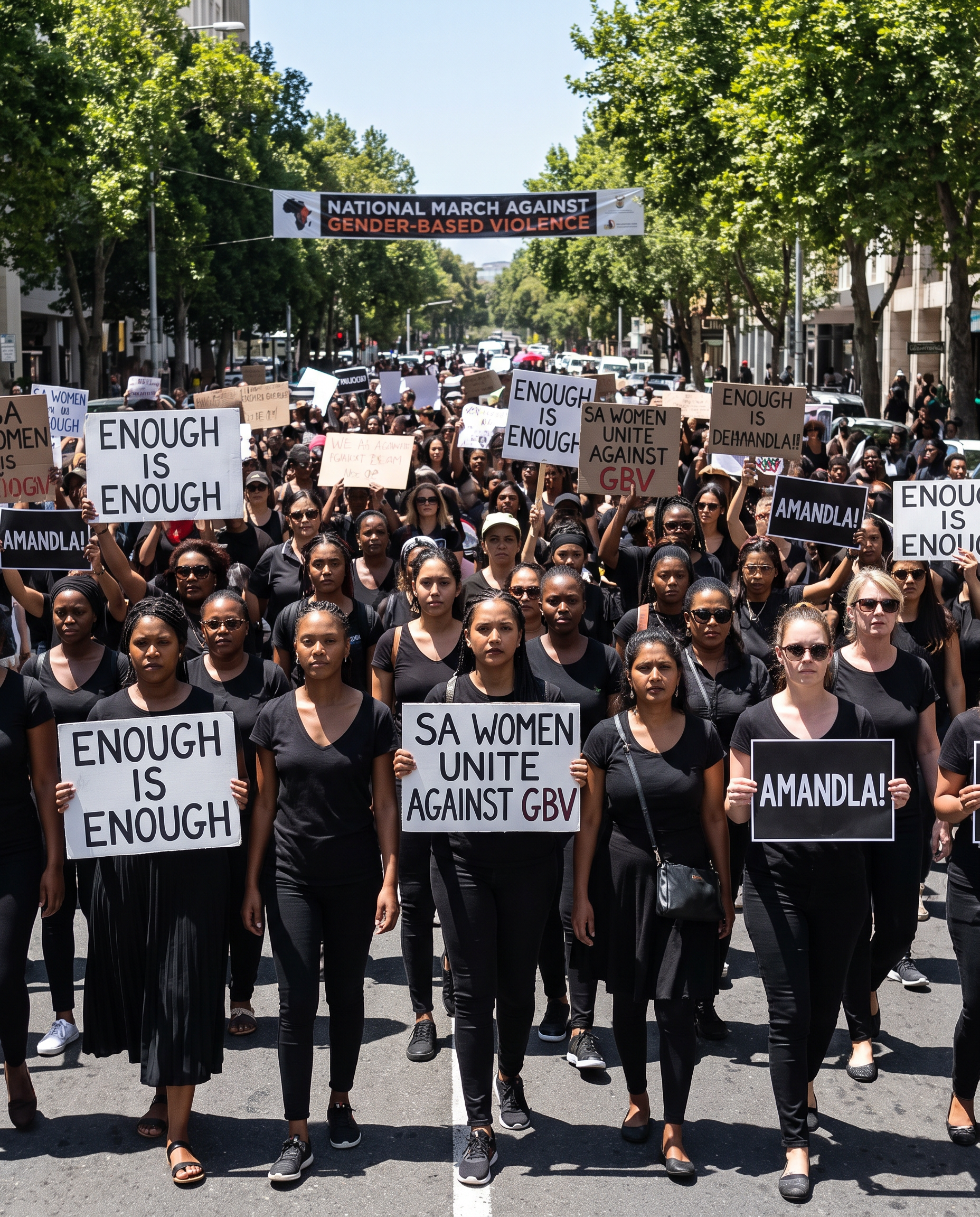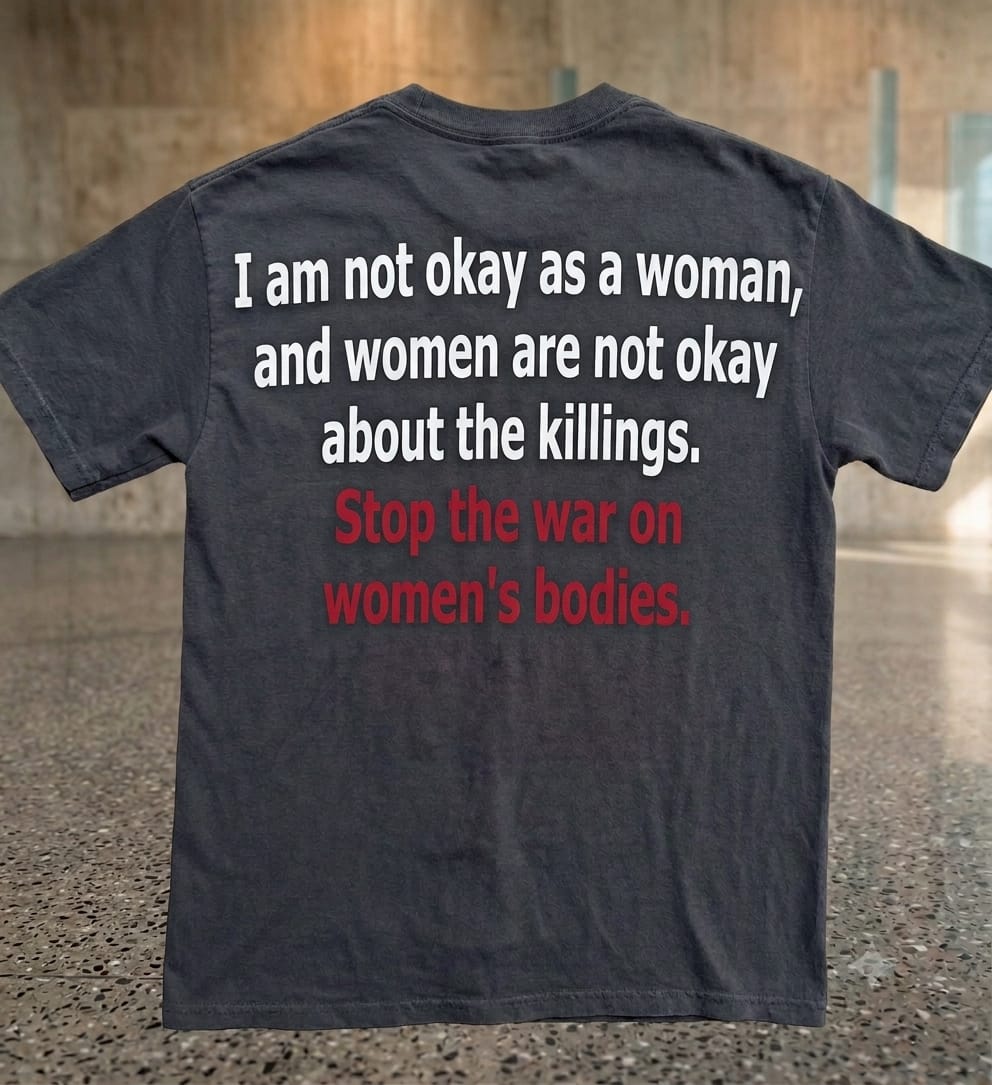
When faith communities are asked to describe the relationship between gender-based violence (GBV) and the church, one word comes up more often than any other: silence.
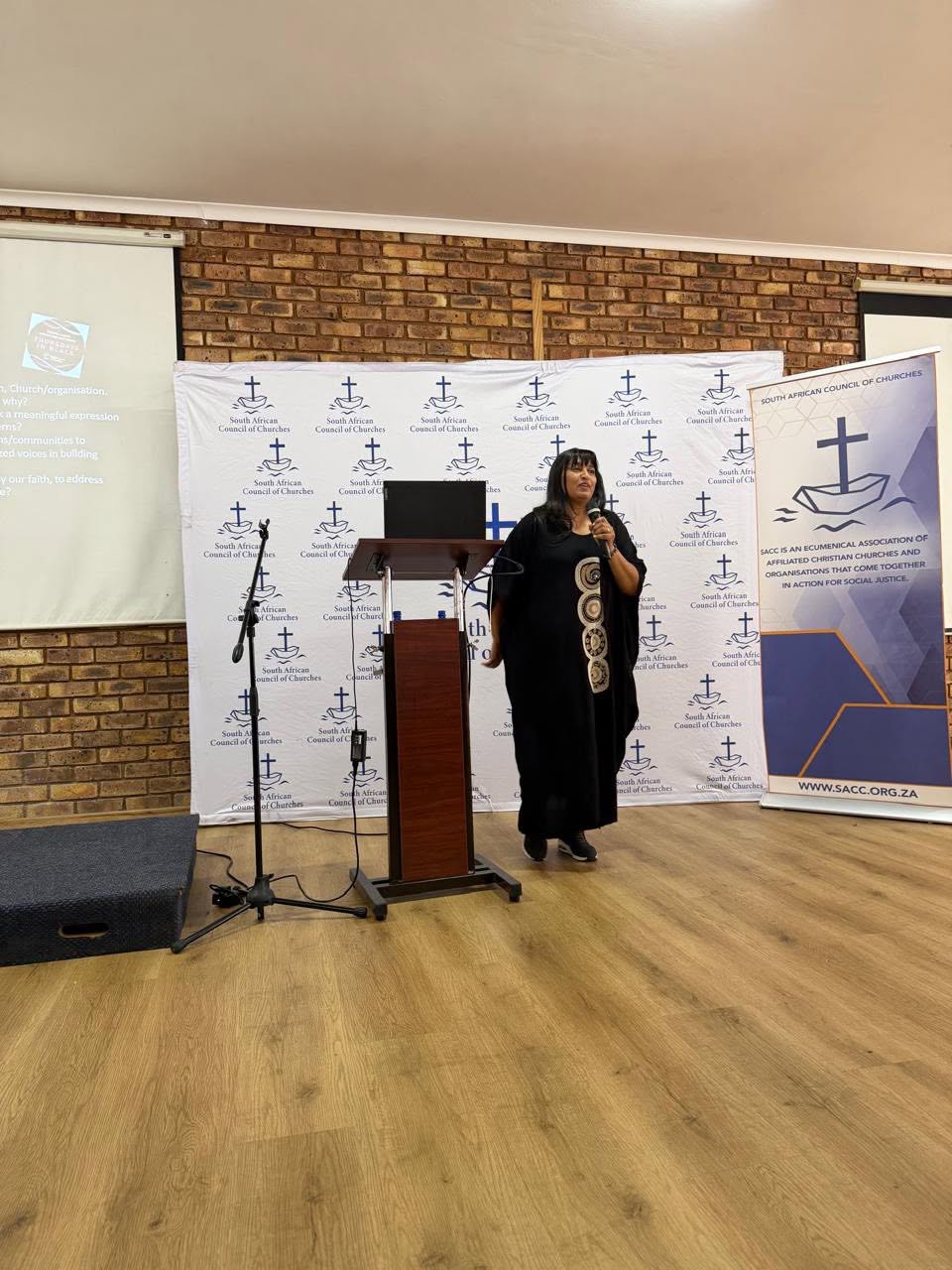
That finding was shared by Merrishia Singh-Naicker, Co-Convenor of the Faith Action Collective to End GBV and relationship and family counsellor, during a recent WWSOSA Lunchtime Conversation on Spiritual Abuse. This was based on her research paper, Holy Harm, Unholy Silence: Farewell to Innocence and the Church’s Complicity in Spiritual Abuse in the Context of Gender-Based Violence.
It is a small piece of data with large implications. It suggests that even within the very institutions meant to offer sanctuary, comfort, and healing, there is a widely shared, almost intuitive understanding that something is being withheld — that when GBV enters the space of faith, the instinctive response is often not confrontation, but quiet.
Naming Spiritual Abuse as a Form of GBV
Merrishia’s research positions spiritual abuse as a significant, but frequently overlooked, dimension of GBV within churches and faith communities. It the insidious use of the sacred to control and manipulate. It is a form of harm that does not always look like harm — it can hide inside sermons, pastoral counsel, doctrine, and even scripture itself, making it uniquely difficult to name, let alone confront.
Her work draws on several intersecting bodies of knowledge: interfaith advocacy, pastoral and therapeutic practice, survivor experience, African women’s theology, and — significantly — the work of South African theologian and struggle icon Allan Boesak, particularly his seminal text Farewell to Innocence. Boesak’s central warning, developed in the context of apartheid-era theology, was about the danger of religious neutrality in the face of oppression: that to claim neutrality when injustice is present is not innocence at all, but a quiet form of complicity. Merrishia extends that same warning into the context of GBV within the church today.
Unholy Silence and Holy Harm
At the heart of Merrishia’s framework are two deliberately provocative phrases: Unholy Silence and Holy Harm.
Unholy Silence names the theological and institutional stillness that follows disclosures of abuse within faith spaces. Her argument is direct: church or faith silence is not neutral. When churches fail to confront abuse — when leadership looks away, when survivors are counselled toward reconciliation rather than justice, when a congregation ignores what has happened or blames the survivor for their lack of obedience and faith— that does not protect the community. It sustains and enables the abuse. Silence, in this framing, becomes an active participant in harm rather than a passive absence of response.
Holy Harm, by contrast is Merrishia’s call to the alternative: to be vocal, rather than silent, in the presence of abuse. It is a reframing of what holiness might actually require of faith communities — not comfort, not the avoidance of conflict, not the protection of institutional reputation, but the willingness to speak, to confront, and to disrupt patterns of harm and even when doing so is uncomfortable, costly, or unpopular within the community itself.
Together, these two concepts form a challenge to faith communities: that the choice is never truly between involvement and neutrality. Silence is itself a choice, and it is one with consequences.
Why This Matters Now
This research does not exist in a vacuum. It builds on a broader body of work — presented alongside Merrishia’s paper at the same Lunchtime Conversation — situating spiritual abuse within South Africa’s legal and policy landscape. Notably, the National Strategic Plan on Gender-Based Violence and Femicide (NSP on GBVF) remains silent on spiritual abuse specifically, even as the amended Domestic Violence Act of 2021 recognises related forms of harm under its definition of “spiritual or emotional abuse” — including the advocacy of hatred on religious or spiritual grounds, restricting a person’s freedom of religious or spiritual conscience, and manipulating religious or spiritual beliefs to justify or enforce abuse.
This is precisely the gap Merrishia’s work speaks into: a form of harm that is legally acknowledged in principle, but rarely named, tracked, or confronted in practice — particularly from within the very faith spaces where it occurs.
Her research also outlines recognisable warning signs of spiritual abuse: an intolerance of questions or doubt, rigid “us versus them” binaries, leaders who demand unwavering loyalty, threats toward those who do not comply, and a leader who offers above-and-beyond care, but in ways that cross emotional, spiritual, or professional boundaries. Crucially, this is never just one behaviour in isolation — it is a pattern, one in which institutions and individuals give power to and empower certain spiritual authorities in ways that ultimately normalise other forms of GBV. It is, as she puts it, a distortion and exploitation of spiritual authority to manipulate, control, or harm others, most frequently through shame and fear.
Echoes From the Room
Merrishia invited participants to share what they describe as relationship between GBV the overlap to her research was striking. Words like silence, gaslighting, discrimination, isolation, spiritual blackmail, favouritism, coercion, and protected abuse appeared again and again, offered by participants of all faiths. One participant summed up the pattern plainly: financial exploitation is real, often disguised as the sale of holy water or oil in exchange for blessings.
The conversation that followed gave real texture to Merrishia’s “Unholy Silence” framework. Daniela Gennrich, WWSOSA’s Coordinator, named gaslighting as a classic way abusers cause confusion, isolate, and silence survivors — an observation several participants immediately recognised in their own experience of “church hurt.” Others pointed to the way scripture itself can be weaponised, emphasising forgiveness while sidestepping accountability, or treating disclosure as disobedience rather than an act of courage. As one participant put it, speaking up in the church can feel less like a rational choice and more like an act of courage.
Several participants also linked their reflections back to Boesak’s warning about neutrality. One noted that congregants often stay silent while witnessing abuse under the guise of “keeping the peace,” not realising that silence itself makes them complicit. Daniela extended this further, referencing Richard Rohr’s observation that “wounded people wound people” — a reminder that unresolved harm within faith communities does not simply disappear, but can be repeated onto others if left unaddressed.
What emerged over the course of the session was not abstract theology, but lived testimony — of women who had been shamed rather than supported when they disclosed abuse, of leaders quietly declining invitations to even discuss the topic, and of survivors met with disbelief from within their own faith communities. It was, as one participant described it, both painful and healing in the same breath: painful in what it named, healing in that, for once, the silence had been broken rather than reinforced.
A Call Beyond the Room
What makes this research so pressing is its refusal to let faith communities off the hook through good intentions alone. It is not enough to be a community that would never condone abuse in principle. If that same community responds to disclosure with silence — with discomfort quietly managed rather than confronted — it has still, in Merrishia’s terms, become complicit in sustaining it.
The word “silence” did not come from critics outside the church looking in — it came from within faith spaces themselves, responding honestly to a direct question.
Naming that silence is the first step. Choosing, deliberately and repeatedly, to break it — to practise “Holy Harm” rather than “Unholy Silence” — is the ongoing work Merrishia’s research calls faith communities toward.
If this conversation resonates with you — as a survivor, a leader, or simply someone ready to stop staying silent — WWSOSA and the Faith Action Collective invite you to find further resources at www.interfaithendgbv.org.za, or to reach out about joining the Spiritual Abuse Working Group currently being formed to carry this work forward: communication@wwsosa.org.za
Contact crisis numbers: https://interfaithendgbv.org.za/wp-content/uploads/2024/11/Bookmark.pdf
This article draws on research presented by Merrishia Singh-Naicker at a WWSOSA Lunchtime Conversation on Spiritual Abuse, based on her paper “Holy Harm, Unholy Silence: Farewell to Innocence and the Church’s Complicity in Spiritual Abuse in the Context of Gender-Based Violence,” presented at the 2026 Farewell to Innocence Symposium — with reflections from participants who joined the live conversation.