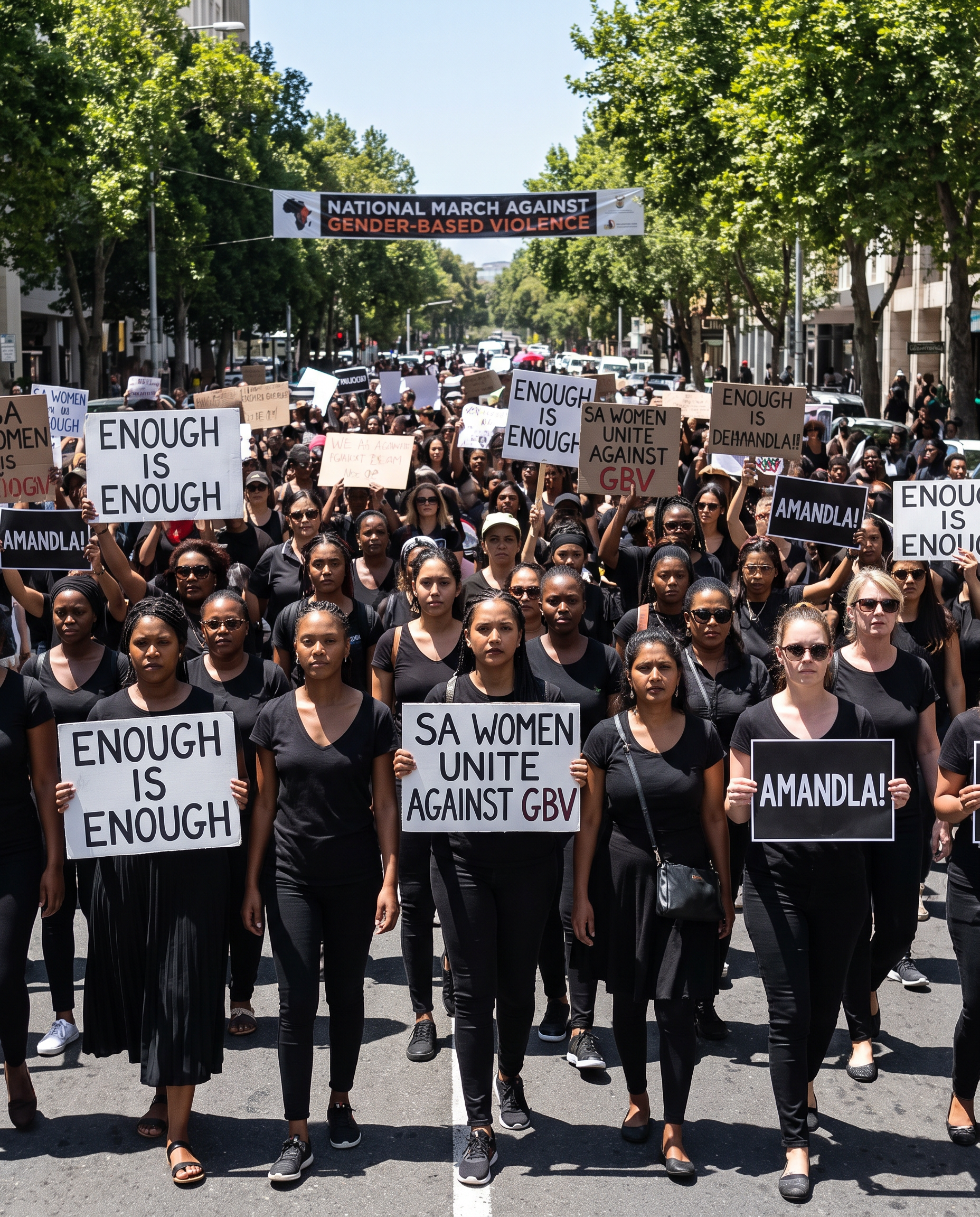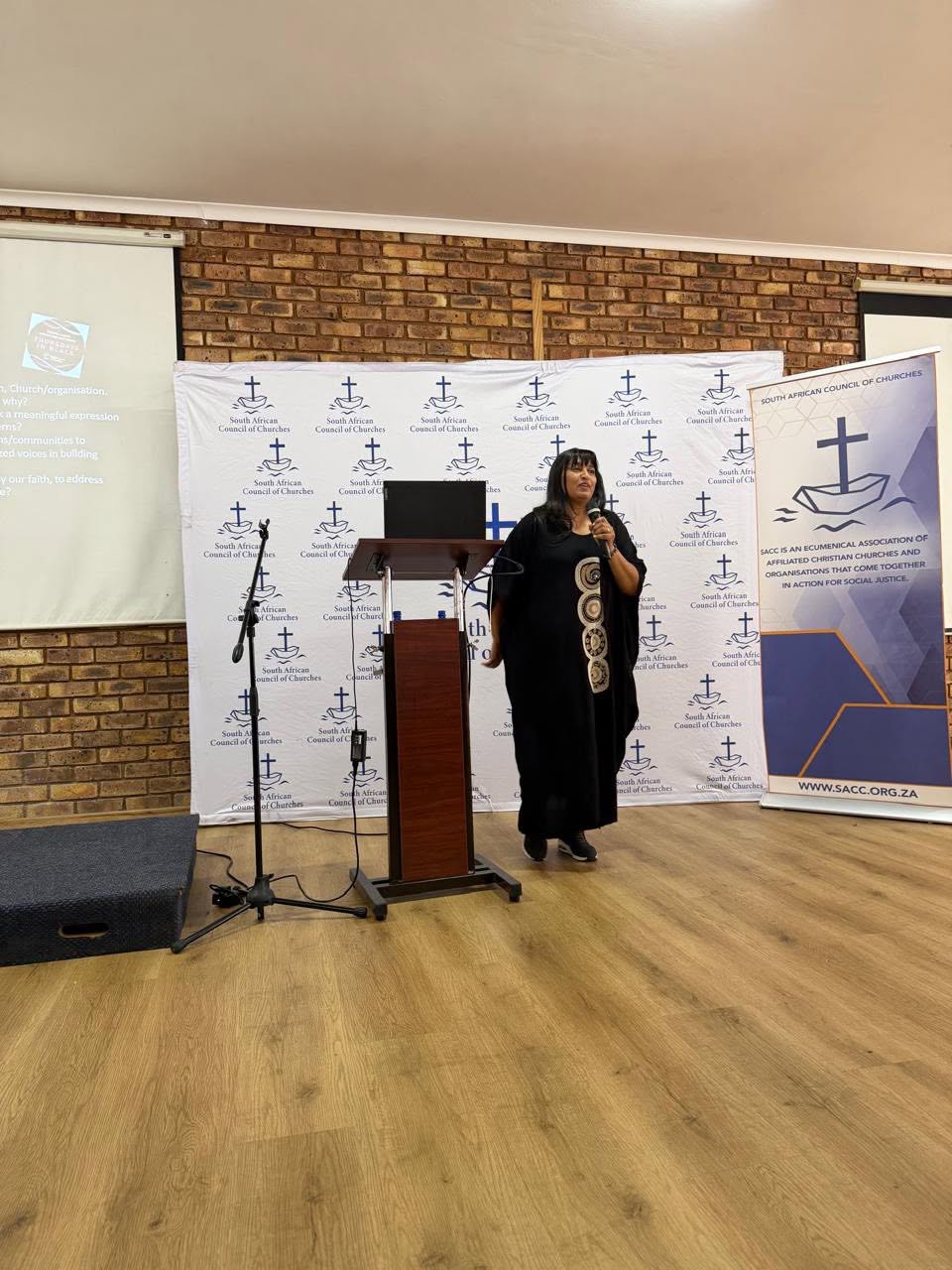
When South Africa’s National Strategic Plan on Gender-Based Violence and Femicide (NSP-GBVF) was launched in 2020, it made almost no mention of the faith sector — except as a source of perpetration. As Daniela Gennrich, Coordinator of We Will Speak Out South Africa (WWSOSA) and a Lay Canon in the Anglican Church, explained at a recent WWSOSA Lunchtime Conversation, this silence cut in two directions: the NSP overlooked the substantial, positive work already being done by faith communities to prevent and respond to GBV, and it said nothing at all about a specific and pervasive form of harm — spiritual abuse.
That gap did not stay unaddressed for long. In 2021, the amended Domestic Violence Act became the first piece of South African legislation to formally recognise the concept of spiritual abuse — a milestone worth pausing on, given how recently the term itself entered legal and public consciousness.
What the Law Actually Says
According to the amended Act, spiritual abuse under the Domestic Violence Act framework rests on three key elements:
Advocating hatred — inciting harm against others because of their religious or spiritual beliefs. While this has been highlighted internationally in relation to conflicts such as the one in the Middle East, Gennrich was clear that this pattern shows up locally too, and often in everyday, unremarked-upon ways — not only within the walls of a church, mosque, or temple.
Restricting freedom — infringing on someone’s constitutional right to religious, spiritual, or belief-based freedom of conscience. A common example is a partner discouraging or preventing their spouse from practising their own faith — frequently underpinned by the assumption that a wife must simply adopt her husband’s religion, rather than the reverse.
Manipulating beliefs — using a victim’s own religious or spiritual convictions to rationalise, justify, or enforce abuse against them.
Definition Rooted in Interfaith Collaboration
Beyond the legal text, a further, more detailed definition emerged from the Interfaith Strategy on Gender-Based Violence Prevention and Mitigation (2024–2030), developed collaboratively by WWSOSA and the Faith Action Collective to End GBV together with partners representing diverse faith traditions. That process involved real research into just how fundamental this issue is — the conclusion being that meaningfully addressing GBV in South Africa is simply not possible without confronting how it intersects with the faith sector specifically.
The Collective’s definition describes spiritual abuse as a distortion and exploitation of spiritual authority to manipulate, control, use, or harm others — mostly through shame and fear.
“Spiritual authority,” in this context, is deliberately broad. It includes sacred texts themselves — the Bible, the Quran, and others — as well as the authority vested in pastors, priests, bishops, imams, those who train healers and other spiritual practitioners.
Recognising the Pattern
Perhaps most usefully, Daniela outlined a set of warning signs that help identify spiritual abuse in practice — not as isolated incidents, but as a coherent pattern of behaviour:
– Intolerance for questions and doubt — leaders who demonise those who ask questions, or who use sacred texts to instil fear, shame, or guilt rather than understanding
– Rigid “us versus them” thinking — the insistence that one’s own community holds exclusive truth, while all others (other faiths, institutions, or even secular bodies) are simply wrong
– Demands for unwavering loyalty — leaders who threaten those who don’t comply with being cut off from the community, or worse, framed as being cut off from God
– Disguised over-involvement — a leader who appears to offer exceptional, above-and-beyond care, but in ways that cross emotional or spiritual boundaries, ultimately disempowering the person and stripping away their agency
Crucially, this is never simply about one abusive individual, or even one institution acting alone. It reflects something deeper: how both institutions and individuals grant power to certain spiritual authorities, sometimes to the point of setting aside their own conscience — often in a genuine, well-intentioned effort to be obedient or faithful.
Why This Matters Beyond the Faith Sector
Perhaps the most sobering point Gennrich raised is this: spiritual abuse rarely exists in isolation. It is frequently used to enable and sustain other forms of abuse entirely — domestic violence (as formally recognised in the Domestic Violence Act), sexual violence, financial exploitation, and emotional abuse.
This is precisely why the work of bridging the faith sector with South Africa’s broader GBV prevention architecture matters. WWSOSA’s Lunchtime Conversations exist for exactly this purpose: to bring together faith leaders and communities with those working across the NSP’s pillar structures, building mutual understanding of how the faith sector fits into a whole-of-society response — not as a separate or peripheral concern, but as an essential part of the picture.
As Daniela put it, this is not a finished body of knowledge, and not something anyone is expected to agree with entirely. But having a shared “lie of the land” — a common starting point for naming and recognising spiritual abuse — is an essential step toward the collaborative work still ahead.
*This article draws on a presentation by Daniela Gennrich, Coordinator of We Will Speak Out South Africa, at a Faith Action Collective Lunchtime Conversation on Spiritual Abuse, addressing how the concept is treated within South Africa’s National Strategic Plan on GBVF, the Domestic Violence Act, and the Interfaith Strategy on Gender-Based Violence Prevention and Mitigation (2024–2030), developed by WWSOSA and the Faith Action Collective to End GBV.