Conventional Western punitive justice essentially says to an offender, ‘you’ve harmed someone, so we’re going to even things up by harming you’. All that does is increase the amount of harm in the world. Forgiveness is a gift. It should not be made into a burden.
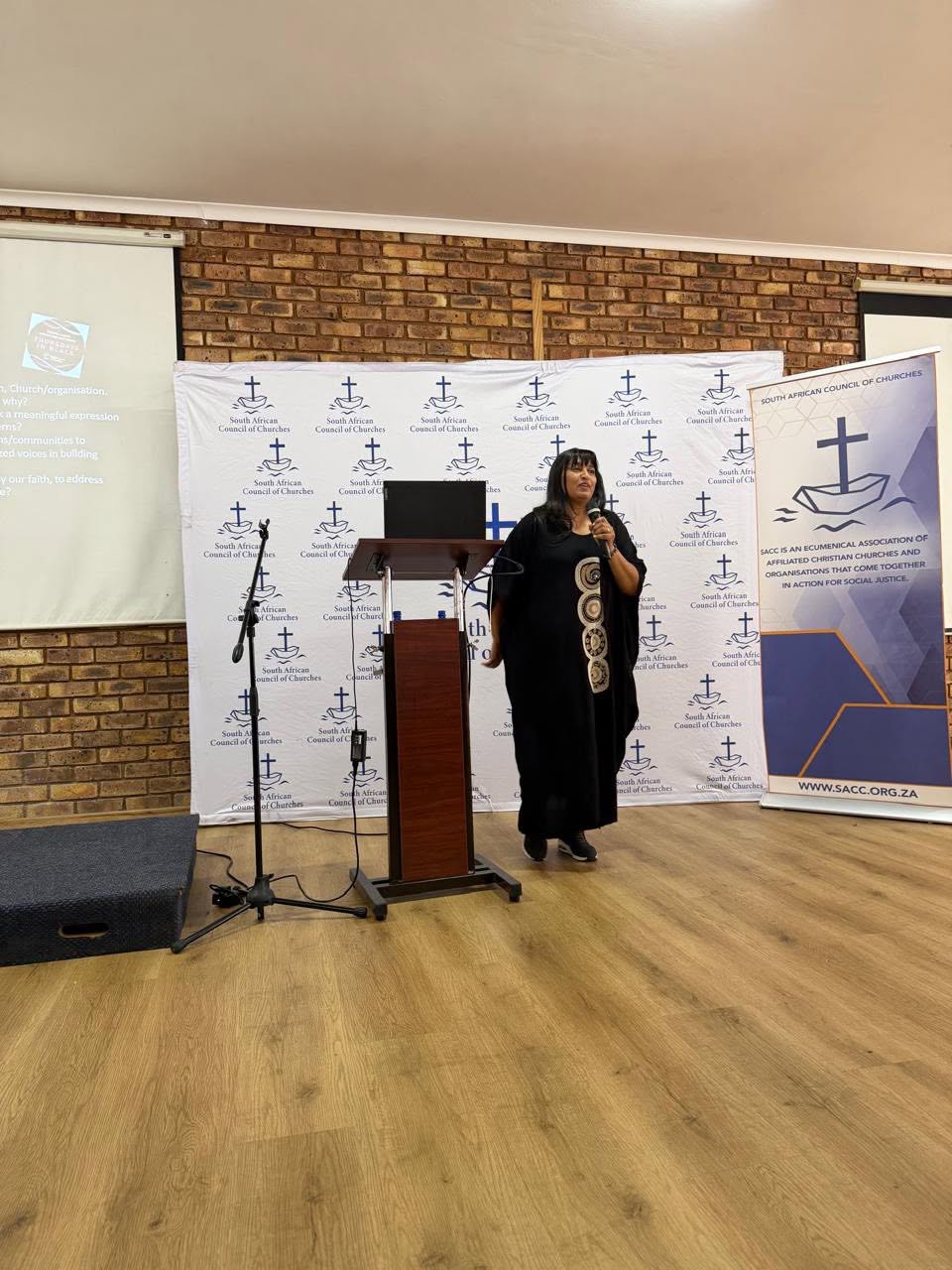
This was shared by Mike Batley of the Restorative Justice Centre (RJC) at our recent Lunchtime Conversation on 20 May 2026, hosted by WWSOSA and the Faith Action Collective to End GBV. He shared the speakers’ slot with Nobuntu Penxa-Matholeni, pastor and lecturer at Stellenbosch University, and Merrishia Singh-Naicker, counsellor and pastoral healer.
Mike began with an overview of restorative justice and highlighted the work and impact of the RJC over the last two decades.
He grounded restorative justice as logical and necessary for intimate partner violence due to the high prevalence of GBV, outrage, and calls for harsher punishment, which is exacerbated by very low levels of reporting and very low conviction rates.
Restorative justice can be done informally, without engaging the system, at a pre-trial level, at a pre-sentence level, at a post-sentence level or before release from prison or as part of a non-custodial sentence.
Mike shared that typical restorative justice outcomes involve:
- An apology
- Restitution in kind or in monetary terms, aimed at compensating the victim for the loss suffered
- Performing some service for the victim
- Performing community service as a way of making right to the community
- Referral of the offender to some form of assistance programme to address some of his/her needs
- A plan to address what future steps can be taken by all involved to reduce the possibility of the recurrence of the crime committed.
The speakers agreed that from a faith perspective, justice is less about punishment, and more about making right, healing, repair, and change at multiple levels.
Merrishia drew on her experience, saying that restorative justice works well in families and communities where trust has been broken, and it repairs the relationships and harm done. She explained that “it is a painstaking process that can take a long time as healing takes intentionality, courage and accountability, and prioritises safety.”
Coming from the church and as a theologian, Nobuntu shared that “restorative justice requires us to resist the idea of artificial peace or quick reconciliation.” She reflected on particular Bible verses as “truth-revealing disruptions”, saying that peace is not always immediate or comfortable. While religious and cultural pressure is on the victim/survive to forgive, Nobuntu shared that forgiveness must be “understood with care and cannot be used to bypass accountability or pressure victims into premature reconciliation.”
Speakers explored when restorative justice is most appropriate and when it is not appropriate. Mike highlighted the challenges experienced about the validity of restorative justice and how the RJC have dealt with these.
Key in restorative justice is that it is victim/survivor-centred. Merrishia emphasised that there are normally “stark power imbalances present in the relationships” and so victim/survivor consent is vital, as is going at the survivor’s pace and letting them know that they are able to stop or exit the process at any given time so they “never feel trapped by it”. She said it is important that they have a safe space to question, vent or express their anger.
What do faith leaders have to bear in mind when using a restorative justice approach? Nobuntu shared that faith leaders need to “hold” accountability and forgiveness together. Mike said that engaging the criminal justice system should not be the preferred route, as it is geared toward punishment and not healing. Merrishia emphasised that the process needs to take power, privilege and positionality into account. She said faith leaders must ensure that they don’t try to “control” healing and that they create a safe and courageous space for truth-telling.
Participants then joined the discussion with one person saying, “Restorative justice must be used for healing and behaviour change, instead of being manipulative which can cause more damage.” There was some discussion about offender rehabilitation and reintegration and how this can dovetail the restorative justice process. Someone said, “Restorative justice must move beyond the goal of restoration and healing only those who have been harmed… we should also seek the deep healing of perpetrators so they can fully recognise and take responsibility for the harm they have caused.” Mike said yes, it was important to highlight the dignity of the perpetrator which is both needed and challenging. Nobuntu added that culturally the view is that “when I am hurt, it is not just me – the whole community is hurt”. Merrishia added that when someone dehumanises, mutuality in healing is needed to ensure all parties feel safe, heard and healed.
If you would like to join the Faith Action Collective group on Restorative Justice or would like to have training on restorative justice, please email: info@communication.org.za.